LORD OF THE SCHOLARSHIPS: THE QUEST (IN CANADA)

Writing about my Ph.D. experience, I can’t leave by my horrible great story with scholarship demands. Each September, I go through the same loop: I write not really effectively the never-ending list of documents needed to apply for scholarships. Scholarships from my University. From Companies. From banks. From the provincial and federal govern. And this is how I felt when waiting for answers at the beginning of my Ph.D.:

Untitled

Pulling together a great scholarship application is tricky. You need to hit the buzzwords real quick and be solid at all levels. Here are the fields you will usually be judged on:

  • Past grades as an undergraduate or master student
  • Research aptitudes and experiences
  • Project quality (scientific and economical)
  • Social implication, leadership and communication abilities

I applied many times to multiple scholarships and “YES” didn’t come too often my way. Every time I got a “NO”, I felt really disappointed and disgusted at the amount of work put in for nothing.

Untitled1


Time passed. I published a paper. I got more experiences in research and gave plenty of talks everywhere. And then one day, it started raining scholarships on me. Thus, here are my advices on how to vanquish Sauron the scholarship committees:

First, identify clearly what are the points you’ll be judged on for each scholarships.

For your grades:

  • I wish I could go back in the past and make myself work harder to get better grades but since this is not possible… yet… if you are still getting grades, make it count!

For your research aptitudes and experiences:

  • You already know this one: try to publish papers. No surprise here…
  • Get involved in many small research projects with your director or fellow students.
  • Offer to give a hand on ongoing projects so that you can learn from this and add it to your curriculum.
  • If you can be the manager of a small intern team during sampling season, this adds definitely to your attractiveness!

For your project:

  • Sadly, these days, scholarships goes with profit, for someone, somewhere. So identify the economical attractiveness of your project and make sure that you make it pop.
  • Make it short, clear, and sound.
  • Identify clearly WHY someone should study that. If you are not able to sell your project and make it sexy, you ain’t trying hard enough.

For your social implication:

  • Get involved in organizations around you. The key here is to find the right amount of time to give. Give too much and it will lessen the energy you’ll have to give on your project.
  • Offer to give conferences at citizen meetings or in schools. This will make you practice your synthesis skills and will improve your quality as a speaker.
  • Use any opportunity to give talks at national or international meetings close-by.

For all your application:

  • Find yourself a good friend (from outside your field of research), that knows you well, and go through your application together. This person will help you proofread your text and can tell you if your project is clear. This person will also be key to add activities or experiences to your curriculum that you could have forgotten.

Armed with all these advices, you can now feel like that when sending your application next fall. Good luck!


 Untitled3

ONE MORE QUESTION: WHAT ABOUT THE “RARE” OTUs?

As I am going through my Ph.D., I cannot stress enough the importance of having a critical mind and using it often.

Can't stop thinking cartoon

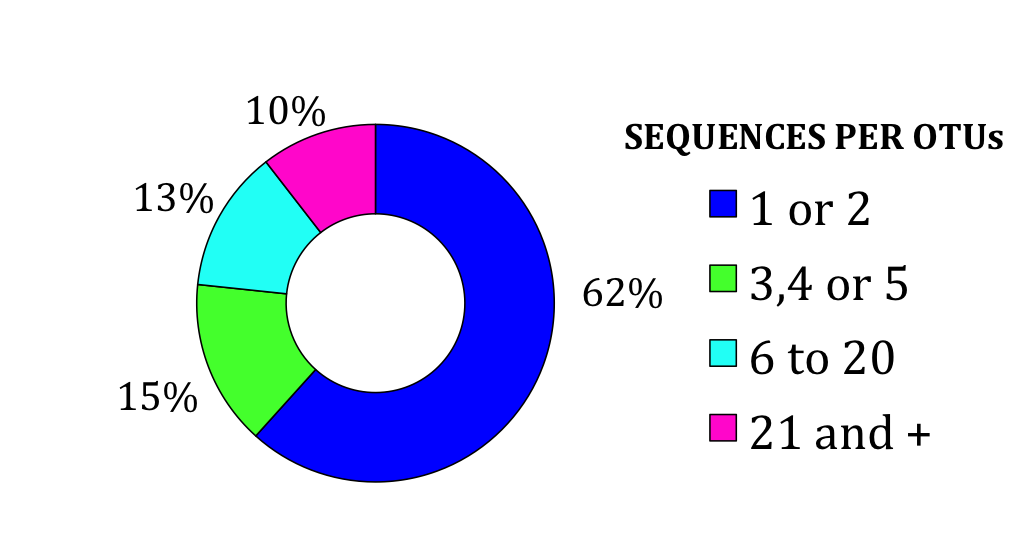
When analyzing a database of 15 Millions of 16S sequences, I arrived to the point where I had picked OTUs (Operational Taxonomic Unit) and got an impressively high number (45580) from which 28113 were represented by singletons (present once) or doubletons (present twice). More then half of my bacterial community from 200 samples relied on the presence of one or two sequences. It made me think about these “rare” sequences, their significance and reliability.

Untitled

SOURCES OF ERRORS

Although they are getting sexier and cheaper every day, the next-gen. sequencing techniques are not free of errors (see Schloss et al. 2011 for strategies to reduce them). Indeed, many sequences might be the result of PCR bias or sequencing errors and therefore be misleadingly assigned as a unique OTU afterwards. Our lack of knowledge on environmental bacterial communities reduces further our ability to distinguish between real “rare” sequences and errors/artifacts. The presence of these artifacts adds another challenge to the already technical task of analyzing high-throughput sequencing datasets.

Untitled

Agreeing with Zhan et al. (2014), I found that filtering processes had more influence on low abundance OTUs. Indeed, quality and chimera filtering removed most of the sequences that were unique from my database (excluding 66% of singletons, doubletons, and tripletons). Another thing to think about is the 16S copy number in one bacterial cell. As shown by Lee et al. (2009) and Rastogi et al. (2009), it is highly common that one cell will hold multiple copies of the 16S sequence (see Kembel et al. 2012 for techniques to control for it). Therefore, to find only one copy of that sequence even through a cell holds multiple version of that amplicon makes me doubt the value of such “rare” sequence. And knowing about the flaws of OTU picking, I am eager to see some new techniques that minimize clustering errors or noise.

Should one consider excluding rare OTUs (singletons, doubletons, tripletons, etc.) from their community analysis? And where to stop the cut?

THUS WHAT THE HELL SHOULD I DO?

Although being more stringent with your database impedes you to study the “rare” members of the bacterial communities, I personally prefer to be overly strict (and miss some OTUs) than be overly negligent (and draw false conclusions). Additionally, one must consider his study’s objectives when deciding what to do with the “rare” sequences. You should be extremely careful when using statistical analyses or estimators that are sensitive to the presence of “rare” sequences. For example, diversity will definitely be over-inflated by the “rare” OTUs (Kunin et al. 2010; Bokulich et al. 2013). A strategy could be to use multiple thresholds of sequence number to accept an OTU as real and then repeat your analyses to see if the results change. In conclusion, although it is tempting to try to study the “rare” microbiome, it remains a hard challenge to distinguish between sequencing artifacts and real “rare” sequences.


REFERENCES

Bokulich NA, Subramanian S, Faith JJ, Gevers D, Gordon JI, et al. (2013) Quality-filtering vastly improves diversity estimates from Illumina amplicon sequencing. Nat Meth 10: 57–59. doi: 10.1038/nmeth.2276

Kembel, S. W., Wu, M., Eisen, J. A., & Green, J. L. (2012). Incorporating 16S gene copy number information improves estimates of microbial diversity and abundance. PLoS computational biology, 8(10), e1002743.

Kunin V, Engelbrektson A, Ochman H, Hugenholtz P (2010) Wrinkles in the rare biosphere: pyrosequencing errors can lead to artificial inflation of diversity estimates. Environ Microbiol 12: 118–123. doi: 10.1111/j.1462-2920.2009.02051.x

Lee ZM-P, Bussema C, Schmidt TM (2009) rrnDB: documenting the number of rRNA and tRNA genes in bacteria and archaea. Nucleic Acids Res 37: D489–93 doi:10.1093/nar/gkn689.

Rastogi R, Wu M, DasGupta I, Fox GE (2009) Visualization of ribosomal RNA operon copy number distribution. BMC Microbiol 9: 208 doi:10.1186/1471-2180-9-208.

Schloss, P. D., Gevers, D., & Westcott, S. L. (2011). Reducing the effects of PCR amplification and sequencing artifacts on 16S rRNA-based studies. PloS one, 6(12), e27310.

Zhan, A., Xiong, W., He, S., & MacIsaac, H. J. (2014). Influence of artifact removal on rare species recovery in natural complex communities using high-throughput sequencing. PloS one, 9(5), e96928.

The Eleven Commandments of Conference and Stress Management

Lucy_Ninja

As the conference season is coming or has already started for Ph.D. students, stress management and slide preparation invade our schedule. So here I give you my best advices for lessening your stress level and achieving the best version possible of your presentation.

  1. PRACTICE: Practice before, and if possible, practice in front of an audience that cares so they can give you feedback. You will be more confident after your test run and the quality of your presentation will be improved by their comments.
  1. RHYTHM: (This one is especially important if you have a dense presentation) Insert a rhythm breaker into your presentation to refocus and recuperate the attention of people that could have gotten lost along the way.
  1. NINJA SLIDES: Imagine what could be the questions someone could ask you and prepare “ninja slides” at the end of your slideshow to support your answer. This will impress your audience and make you look prepared and professional.
  1. AUDIENCE: Know your audience and personalize your presentation to fit their requirements. You will increase your success by hitting the buzzword they want to hear and avoiding spending a lot of time explaining things they know a lot about.
  1. GRAPHS: If you show a graph in your conference, make sure to take the time to explain it’s meaning, the axes and the statistics used. If you don’t plan to explain it don’t show it.
  1. TEXT: Please, you are giving a presentation; not making your audience read your thesis on a big screen. AVOID big sentences, use key words and phrase out loud the theory rather than loading your slides with long pieces of text. Nobody reads them.
  1. WATER: Have a bottle of water with you so you can stop and take a sip. It will give your audience a break and help you to pace yourself.
  1. BREATH: Before the presentation: steady your breath, inspire slowly and keep calm. The first words are always harder, then your voice will steady and you just need to make sure that you will keep breathing!
  1. AAAAAaaaa: Don’t put an “aaaaaaa” sound at each pause between your sentences. It is the most annoying thing in a presentation and shows your lack of control. Just take the time to shape a full sentence and think before talking.
  1. EYE CONTACT: Make sure to make eye contact with your audience, you will be able to see if they are following you or if they are lost and you need to spend more time explaining something. You also engage more with the audience and they are more drawn to your presentation by your energy.
  1. ACCENT: For those of us that don’t speak English as a first language, remember that your accent can get in the way of your presentation and that you need to ARTICULATE and talk SLOWER. It’s already hard to keep focused on a long day of conferences, if your audience can’t understand what you are saying it’s over.

I hope this can be useful to you. What are your advices to give the best presentation?

Introduction

Hi, welcome to my blog. This platform is used as a tool to diffuse my academic projects, thoughts, and academic experiences, including:

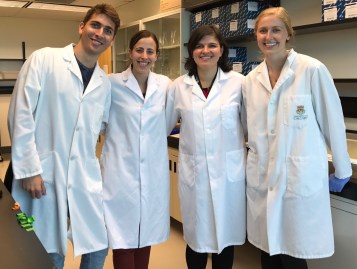
  • a description of my Ph.D. project under the supervision of Pr. Steven Kembel (http://kembellab.ca) and of my experience as a graduate student;
  • of my Postdoctoral fellowship with Pr. Marie-Claire Arrieta (Arrieta Lab) at the University of Calgary;
  • and finally of my new lab started in January 2020 at the Université de Sherbrooke!

If you have a question or interest in my projects feel free to contact me! isabelle.laforest.lapointe at gmail.com / Isabelle.laforest-lapointe at uSherbrooke.ca

Postdoctoral Fellowship (2017-2019)

Image

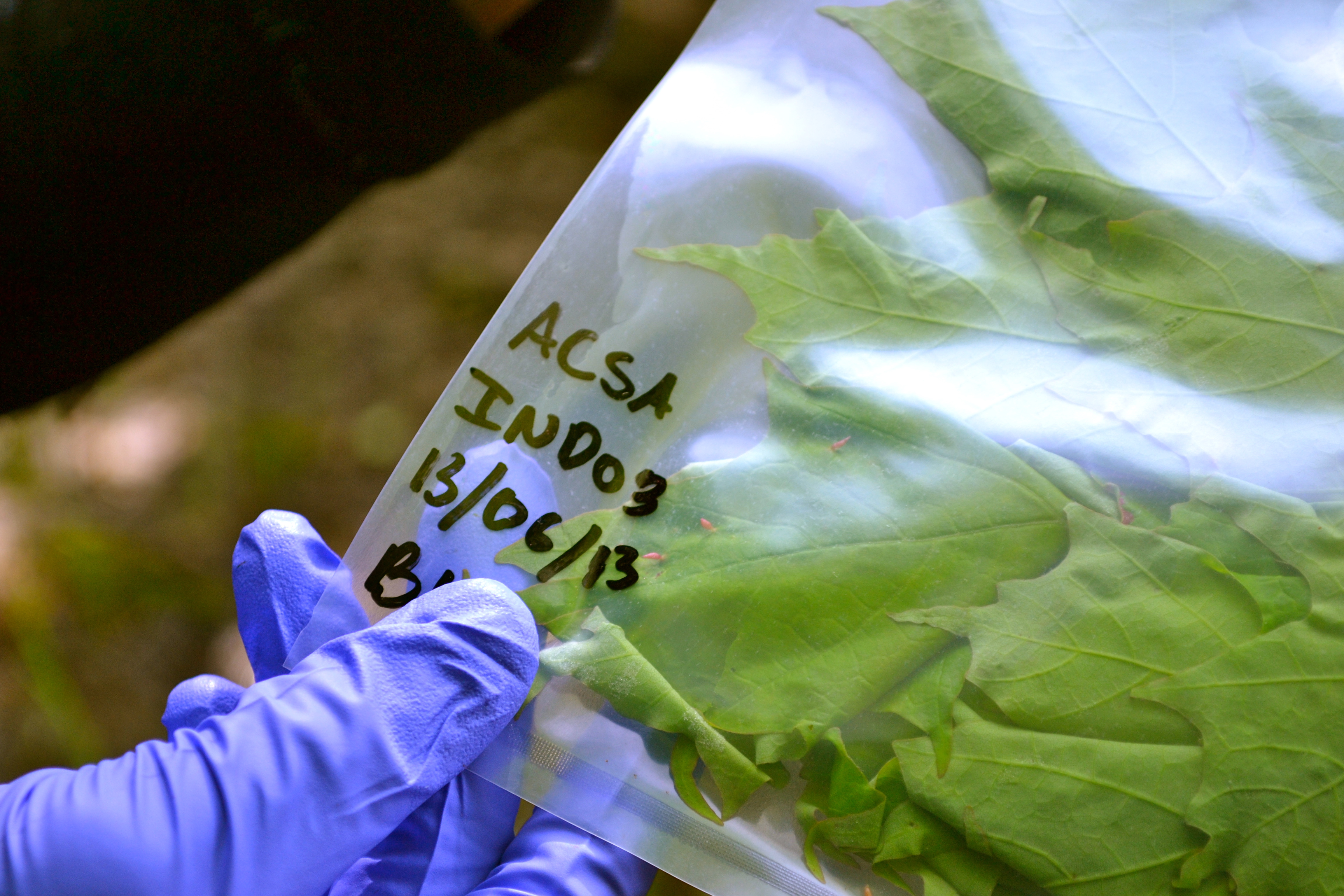
My projects at the University of Calgary involve the microorganisms that inhabit our gut. Sadly it is much less fun to extract the DNA of microbes from poop than from tree leaves! But it is very interesting to investigate how the early-life microbial communities (potentially in the first 3 years of life, while the gut bacterial diversity is increasing at a fast pace) contribute to the training of the immune system and reduce the risk of developing allergies and asthma later in life. Although most gut microbiome studies have focused on bacterial communities, micro-eukaryotes could also play a key role in driving the early-life immune development. One of our hypotheses is that fungal communities in the human gut are regulated by their bacterial counterparts, but when antibiotics are given in early-life these eukaryotes suddenly reach new niches to exploit (left void by the sudden decrease in bacterial diversity) and this fungal overgrowth could create an deranged mucosal immunity leading to higher prevalence of asthma and allergies. We are also interested by the question of diversity vs. functions: we are wondering if it is diversity driving the immune development or is it the presence of key microbial fonctions? Another project of interest to me is the relative of top-down vs. bottom-up processes in controlling the host-microbe and microbe-microbe interactions in the human gut. I am using my expertise in microbial ecology, bioinformatics, genomics, statistics, and microbiology to pursue these highly interesting questions. As you can imagine this is a pretty big leap for me coming from a Biology Department to a Medical Health Department but the challenges are what shape us as scientists and I have never been more excited about my work!

Ph.D. Projects (2012-2017)DSC_0016

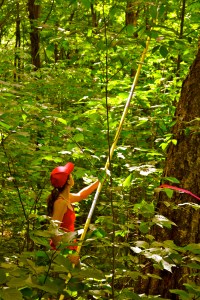
Bacteria and fungi colonize almost all plant surfaces and tissues, from the roots (rhizosphere) to the leaves (phyllosphere). The diversity of these communities regulates several ecosystem functions, principally through its implication in enzymatic processes (nutritional, defensive and biochemical). Microorganisms are characterized by a high surface/volume, rapid growth and short generation time, allowing microbes to respond quickly to any environmental modifications. Every change in microbial biomass, metabolic activity or community structure could be considered the beginning of a global ecosystem change. Since 2000, a major revolution has affected microbial studies as the development of high-throughput sequencing methods has freed researchers from culture-dependent methods that limited census sampling depth and quality. Whereas various studies have quantified the soil microbial community’s key role in regulating plant community formation and dynamics, an insufficient number of studies have looked at phyllosphere microbial communities and the role they play in forest ecosystem dynamics. Some recent results suggest a very high complexity of phyllosphere microbial community dynamics, but the key determinants of the structure and variation of the leaf-habitat communities still need to be identified.

DSC_0019DSC_0042

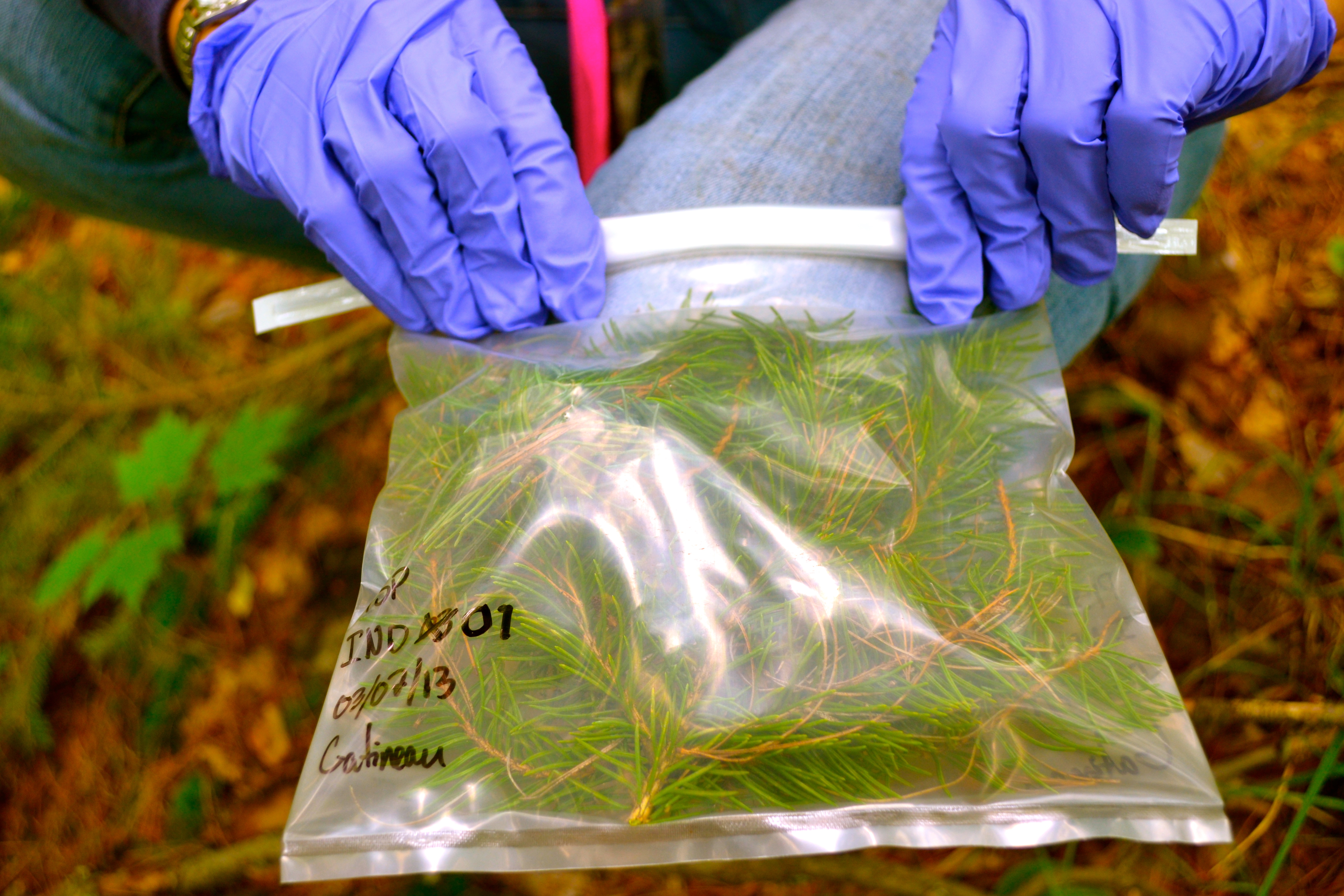
Recent innovation in sequencing techniques has allowed the first complete, affordable and rapid microbial censuses. The aim of this project is to establish essential knowledge of the processes driving phyllosphere microbial community dynamics in the temperate forests of Quebec. This project has three objectives: (1) to identify macroscopic determinants of phyllosphere microbial community composition in natural temperate forests; (2) to determine microscale determinants of phyllosphere microbial dynamics of temperate trees; and (3) to test and observe the effects of urban stress on phyllosphere microbial community of urban trees in Montreal.


Here are other contributions in writing and videos:

20% Interview at Quebec Science in French

QIAGEN Q & A

QIAGEN Webinar

Les années lumières – Radio-Canada

Découvertes de l’année Québec Science

UQAM TV

Contribution to Science Presse – Blogue ta science

CEF-CFR Profile