Why Learn R?

Learning a new language is always a tedious and challenging experiment. It is long. It is frustrating. It is tiring. Then, after a looooong while, it is rewarding. So why should you bother to learn a new statistical language? Why learn the R language? Why should you spend hours, days, weeks, drinking countless coffees, trying to get a grip of R?

6a010534b1db25970b015435c323fc970c-800wi

So you’ve been using EXCEL, SAS, SPSS, Minitab, or others, for years. You’ve gotten confortable and effective. And now SOMEBODY (What an A**!) tells you that you should switch to R because it’s much more effective/productive #trendy. And you are scared/pissed off/just not interested. But wait a minute; do you know what is R? R is a programing language designed to facilitate data exploratory analysis, classical statistical tests and high-level graphics. R is a flexible, cutting-edge, powerful, statistical tool. Now that you know what R is, what does it do more than EXCEL, SAS, SPSS, and the likes? Why is it worth your time and energy? R language offers many advantages compared to other statistical tools. It is strong enough to handle big messy data. It allows the writing of a reproducible script for cross-scientific validation (which is non-arguable for scientists). It offers you more than 2000 libraries (a plethora of packages developed to perform particular functions and tasks) in a huge variety of fields. These libraries are made by those who use them and for those who use them. R reinforces scientist good habits in statistics and data management. It integrates with many other programing languages such as Java, C++ and Python as well as with other statistical tools such as IBM SPSS. Many big industrial players such as Facebook, the NY Times, Google, and Bank of America use R. And R works on all platforms: Windows, MAC, Linux. R is the leading edge of development in statistics, data mining and data analysis. But most of all, R is free, open source, transparent, open to community critics and reviews thus fast to improve. R is definitely trending, yes, because R is moving now, and it’s moving fast. To include R as one of your assets is a crucial advantage for recruitment. Yes, it is possible that you will swear on a forgotten coma, or be slow on debugging R errors. But R has a ton of blogs and peer-supported communities to help you learn its components and integrate them to your day-to-day work. You have no excuse not to give a shot at learning R.

http://www.r-project.org

http://www.inside-r.org

http://www.revolutionanalytics.com/r-community

http://www.r-statistics.com/tag/r-community/

My Actualized Version of Stearns & Huey 1987 : Some modest advices to graduate students

Be strategic

keep-calm-and-be-strategic-3

Think about the next 2 years (master) or 4 years (Ph.D.) but also about the aftermath of your graduate studies. What do you want to do after, and at what rhythm? Where do you want to work? What motivates you in life? When you have the answers (or an idea) for all these questions (and it should be in the first month of your studies), play your cards well to get to your life objective. What do you need to do to achieve your goal? Does your director know your goal? Is he acting for you to get it? What can he do to help you? Always be strategic about any training, collaboration and project you set so that when you finish your studies, you will have a full set of arms to shoot for your dream job and life. No regrets.

Learn other languages

langues-etrangeres

If you don’t already speak, read and write in english, get to it soon. You are already late. You’ll go nowhere if you keep using translators to read papers or to write your own manuscript. On the other hand, if you speak only English, know that people that learn many languages stimulate constantly their brain and create patterns of thinking and synapse routes that improve their cognitive efficiency plus help them to keep a healthy memory longer. Thus, get your lazy brain working and learn another language. It will enrich your personality and open your mind.

Select your director(s) carefully

esp

It might be easier to find a director that already has a busy-well-crowded student group. Although some advantages might come of the knowledge and support you can get from colleague students, your director will be really busy and won’t take you by the hand through all steps and challenges. If you are the independent type, this can fit perfectly with you, but if you are rather the dependent type, go with a director that has a smaller group or is beginning he’s professor assignment, for he will be much more present along the way to give you good advices and support you through challenges.

Know when to ask for help

help-wanted

It is always good to solve problems by yourself, or at least try to work the first steps towards a solution. However, if it’s been more than 2 weeks that you are stuck and you feel depress, tired, you want to quit your studies, please ask for help either directly to your adviser or to a supportive post-doc or university professor. Pride and stubbornness will only bring you to exhaustion and will impede you to advance your project. Don’t be scared to look stupid by asking questions, to lose one month over something you could have solved in one week with help makes you look foolish and immature.

E-mails = Short

long-text-007

If you want your message to get through to a busy colleague, don’t write a novel. Go straight to the point. If you have more than one question, consider if a meeting is needed, and if not, make sure to organize your text into paragraph/idea to facilitate your correspondent’s life.

Use your fellow students
teamwork-worlde

The people that are already working in the lab when you arrive are full of knowledge and advices that will definitely be useful to you. You shall treat them well so they will want to support you when time will come. If they look focused or angry with their computer, don’t bother asking now. You should either wait when they get up to do something or ask them to tell you when they would have time for you. In the lab, if you get support from a colleague, you should try to give them a similar favor, for them to see the advantage of having helped you and increase their willingness to support you in the future. Remember, your lab is your home for the next years, so your lab buddies are your family and resources.

Use, acquire & conquer

starting1

If your center offers resources to students, make sure to use them to learn more and get more independent with your project every time. Take notes, ask questions, and inquire so that afterward you will be a resourceful researcher. The more useful you are as a colleague the more you will be included in projects and the more you could publish.

Have a healthy life

panacea-health.co_.uk_

Make sure to move during your work day, take an activity brake every hour for ten minutes if you can, so that the toxin that accumulate in your body and in your brain get washed away and you can regain focus and energy. Eat well and often (small portions). Your brain needs good protein, stable sugar flow, vitamins, minerals, enzymes and A LOT OF WATER. Sleep as well as you can and try to establish a working routine so that you work and rest enough throughout the week. Find your equilibrium and use it to your advantage.

Organize your day

schedule

Find the period in the day during which your brain works to its fullest strength. Then, always plan your brainy tasks to be done at that moment and keep other less cerebral tasks for other moments when you feel more tired. You will feel that your days are more productive and easier to go through because you won’t be fighting all the time to get the job done. Sometimes it will be impossible and you will have to force yourself but the increased energy you will get from this strategic schedule will translate in all spheres of your life.

Do what you love & love what you do

98164466848335250_C4DOB4O4_c

If you feel unhappy about your work, if every morning feels like the hardest day of your life and you struggle to go through it without smile and laughter, then you might consider changing your study path. You have just one life, and though I almost never leave a project incomplete, sometimes if you made a mistake in your life choices, you better fix it soon than too late. Make sure you know yourself well enough to know what you don’t want to do and focus on what intrigues and inspires you, whatever it is.

READ – THINK – LEARN – NOTE – WRITE

preferred-work-methods_th

You should always read papers in your domain, but also of satellites domains to keep in touch with what is being done and what is trendy now. Create a work method that will work for you so that you can take notes whenever reading a paper. A good notes document could be the best thing to have when starting to write. Since writing is something you should do quite often, to already have a bank of insightful notes will give your work a strong baseline.

Introduction

Hi, welcome to my blog. This platform is used as a tool to diffuse my academic projects, thoughts, and academic experiences, including:

  • a description of my Ph.D. project under the supervision of Pr. Steven Kembel (http://kembellab.ca) and of my experience as a graduate student;
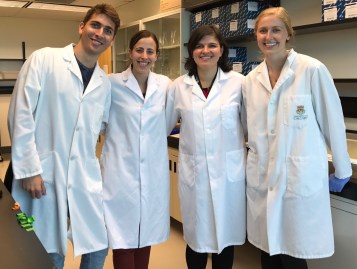
  • of my Postdoctoral fellowship with Pr. Marie-Claire Arrieta (Arrieta Lab) at the University of Calgary;
  • and finally of my new lab started in January 2020 at the Université de Sherbrooke!

If you have a question or interest in my projects feel free to contact me! isabelle.laforest.lapointe at gmail.com / Isabelle.laforest-lapointe at uSherbrooke.ca

Postdoctoral Fellowship (2017-2019)

Image

My projects at the University of Calgary involve the microorganisms that inhabit our gut. Sadly it is much less fun to extract the DNA of microbes from poop than from tree leaves! But it is very interesting to investigate how the early-life microbial communities (potentially in the first 3 years of life, while the gut bacterial diversity is increasing at a fast pace) contribute to the training of the immune system and reduce the risk of developing allergies and asthma later in life. Although most gut microbiome studies have focused on bacterial communities, micro-eukaryotes could also play a key role in driving the early-life immune development. One of our hypotheses is that fungal communities in the human gut are regulated by their bacterial counterparts, but when antibiotics are given in early-life these eukaryotes suddenly reach new niches to exploit (left void by the sudden decrease in bacterial diversity) and this fungal overgrowth could create an deranged mucosal immunity leading to higher prevalence of asthma and allergies. We are also interested by the question of diversity vs. functions: we are wondering if it is diversity driving the immune development or is it the presence of key microbial fonctions? Another project of interest to me is the relative of top-down vs. bottom-up processes in controlling the host-microbe and microbe-microbe interactions in the human gut. I am using my expertise in microbial ecology, bioinformatics, genomics, statistics, and microbiology to pursue these highly interesting questions. As you can imagine this is a pretty big leap for me coming from a Biology Department to a Medical Health Department but the challenges are what shape us as scientists and I have never been more excited about my work!

Ph.D. Projects (2012-2017)DSC_0016

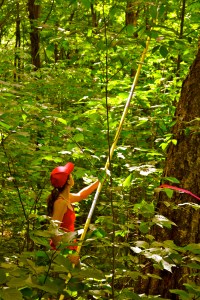
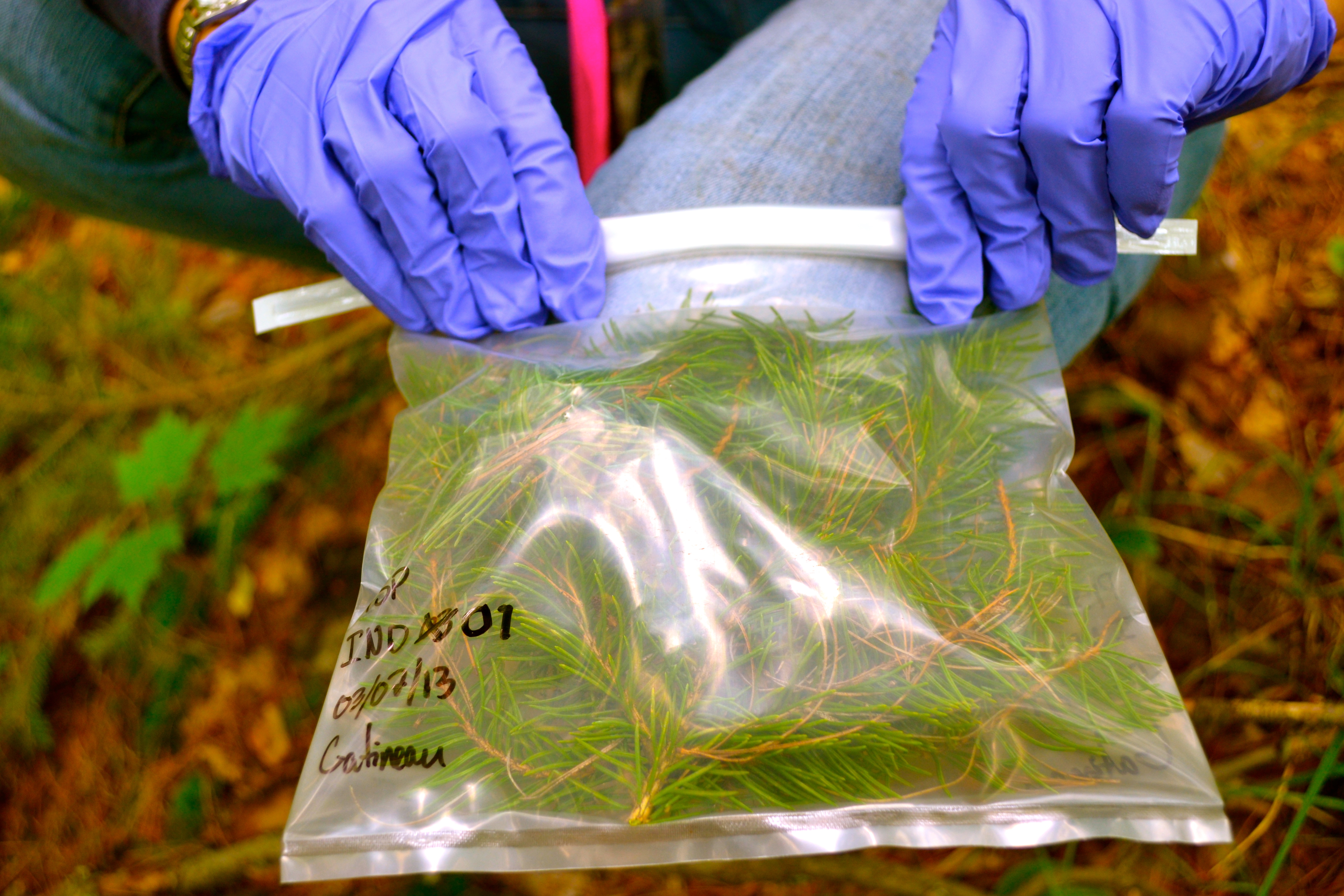
Bacteria and fungi colonize almost all plant surfaces and tissues, from the roots (rhizosphere) to the leaves (phyllosphere). The diversity of these communities regulates several ecosystem functions, principally through its implication in enzymatic processes (nutritional, defensive and biochemical). Microorganisms are characterized by a high surface/volume, rapid growth and short generation time, allowing microbes to respond quickly to any environmental modifications. Every change in microbial biomass, metabolic activity or community structure could be considered the beginning of a global ecosystem change. Since 2000, a major revolution has affected microbial studies as the development of high-throughput sequencing methods has freed researchers from culture-dependent methods that limited census sampling depth and quality. Whereas various studies have quantified the soil microbial community’s key role in regulating plant community formation and dynamics, an insufficient number of studies have looked at phyllosphere microbial communities and the role they play in forest ecosystem dynamics. Some recent results suggest a very high complexity of phyllosphere microbial community dynamics, but the key determinants of the structure and variation of the leaf-habitat communities still need to be identified.

DSC_0019DSC_0042

Recent innovation in sequencing techniques has allowed the first complete, affordable and rapid microbial censuses. The aim of this project is to establish essential knowledge of the processes driving phyllosphere microbial community dynamics in the temperate forests of Quebec. This project has three objectives: (1) to identify macroscopic determinants of phyllosphere microbial community composition in natural temperate forests; (2) to determine microscale determinants of phyllosphere microbial dynamics of temperate trees; and (3) to test and observe the effects of urban stress on phyllosphere microbial community of urban trees in Montreal.


Here are other contributions in writing and videos:

20% Interview at Quebec Science in French

QIAGEN Q & A

QIAGEN Webinar

Les années lumières – Radio-Canada

Découvertes de l’année Québec Science

UQAM TV

Contribution to Science Presse – Blogue ta science

CEF-CFR Profile